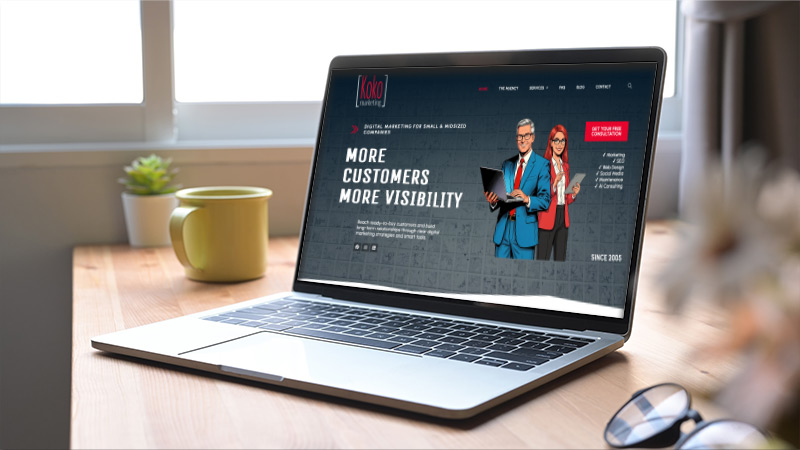

“You never get a second chance to make a first impression.” Will Rogers said it, but a web designer could have just as easily written it. When potential customers visit your company website, they decide within seconds whether to stay or move on. The part they see first is called above the fold and it is more important than you might think.
What does “above the fold” really mean?
The term comes from the newspaper world. Everything on the top half of a folded paper had to grab attention instantly. In web design, above the fold refers to the part of your website visitors see without scrolling. It is the digital storefront for your business. It may sound simple but it is not. This first glimpse often determines whether someone continues exploring your site or ends up at a competitor’s. And it happens faster than you can say “conversion rate.”
Why it matters especially for small and mid-sized businesses
Small and mid-sized businesses rarely have huge marketing budgets. Every click counts. Every second of attention is worth real money. That is why you cannot waste the above-the-fold space on decorative images, long-winded intros, or vague text that does not communicate value.
What should go above the fold?
Here is a quick checklist for businesses that want to do more than just look good and actually sell:
- Your Unique Selling Proposition (USP): What makes your offer stand out? Make it bold and unmistakable.
- A Clear Call to Action (CTA): Tell visitors what to do next. Ask them to contact you, request a quote, or book a demo.
- Visual Clarity: Avoid cluttered banners and walls of text that overwhelm the reader.
- Mobile Optimization: Even the most perfect above-the-fold design fails if it is not mobile-friendly.
Above the fold is not just design it is sales psychology
Underestimating this space costs you potential customers. Your website is not a digital brochure. It is a salesperson working 24/7. Make sure it convinces visitors from the very first second.