
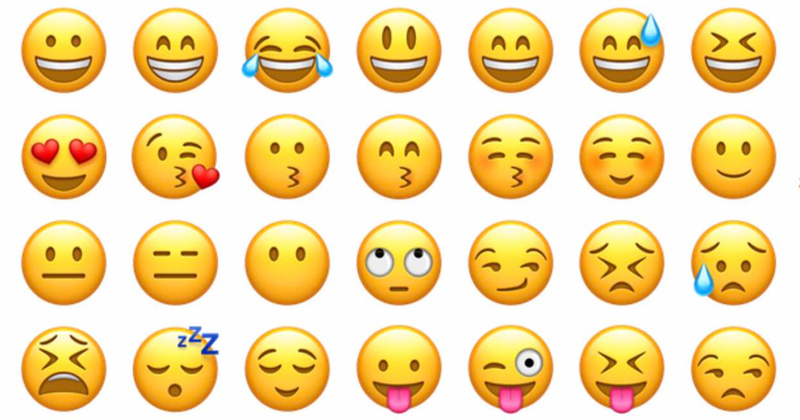
Whether it’s a grin, a kiss, or a dramatic crying face, emojis have become a normal part of how we communicate online. More than 90 percent of people who interact on the internet use them. And honestly, that makes sense. Emojis are fun.
But they also serve a real purpose. In written communication we lose facial expressions, body language, and tone of voice. Emojis help fill that gap. A small icon can signal humor, soften a message, or make the intent clearer. In many cases, they actually reduce misunderstandings.
Emojis in Email
Many business owners still hesitate to use emojis when communicating with customers. The assumption is simple: emoticons in professional emails must look unprofessional and damage a company’s reputation.
Research suggests the opposite.
A study conducted at the University of Missouri–St. Louis examined how emoticons influence communication in both social and task-oriented environments. The researchers found that even in formal, business-related emails, emoticons created a positive expectation. Because they come across as friendly, emotional, and human, they can actually improve how a message is received.
Even more interesting: the sender’s credibility didn’t suffer at all. The positive effect remained even when several emoticons appeared in a single email. In other words, a small smiley in the right place won’t sink your professionalism. 📩
Emojis in Marketing
On social media, using emojis is almost a no-brainer.
A Facebook update, a tweet, an Instagram caption. Posts that include emojis consistently attract more attention than plain text. They stand out in crowded feeds and add personality to a brand voice.
That said, restraint matters. Emojis should support a message, not replace it. Words still do the heavy lifting. A good rule of thumb is simple: use them sparingly.
International communication adds another layer. Symbols don’t mean the same thing everywhere. A pig, for example, is considered a symbol of luck in Germany, while in other cultures it can be interpreted as an insult. When your audience spans multiple countries, emoji choices deserve a quick second thought. 🐷
Quick Emoji Facts
The most frequently used emoji worldwide is the “Face with Tears of Joy.” 😂
Emojis don’t look identical on every device. The same icon can appear slightly different on different smartphones or computers.
Pizza chain Domino’s once allowed customers to order a pizza simply by tweeting a pizza emoji. 🍕
In 2015, the World Wildlife Fund launched the #EndangeredEmoji campaign. Twitter users were encouraged to share or include specific animal emojis representing endangered species in order to raise awareness and donations.
Durex also pushed for the creation of a condom emoji as part of a campaign promoting safer sex. #CondomEmoji 🍆🍑
Campaign examples:
Durex: [https://twitter.com/durex/status/669104647878156289](https://twitter.com/durex/status/669104647878156289)
WWF: [https://twitter.com/WWF/status/598029545627844608](https://twitter.com/WWF/status/598029545627844608)
Small symbols. Big communication impact. Used thoughtfully, emojis can make digital conversations feel more human, even in business. And in a world of overflowing inboxes and endless feeds, that little bit of humanity can go a long way.